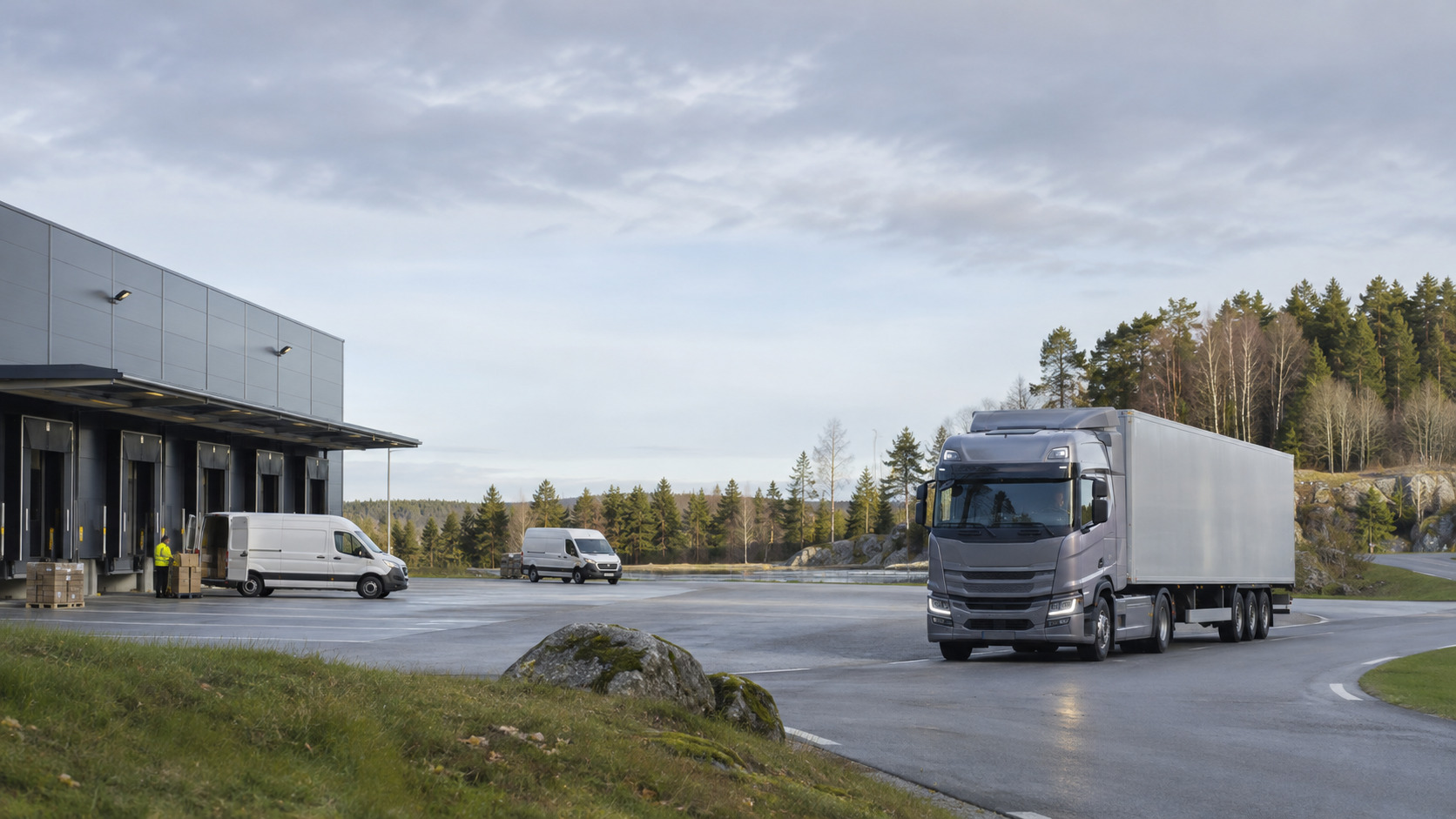
The first quarter brought mixed results for heavy vehicles across the Nordic market, both in overall registrations and in the share of electric vehicles.
It is difficult to draw a single conclusion about the heavy vehicle market across the Nordics in Q1. One clear trend is that the N2 category performed better than a year earlier in every market, while Denmark was the only country to finish the quarter with growth in all three segments: N1, N2 and N3.
Van markets move in two different directions
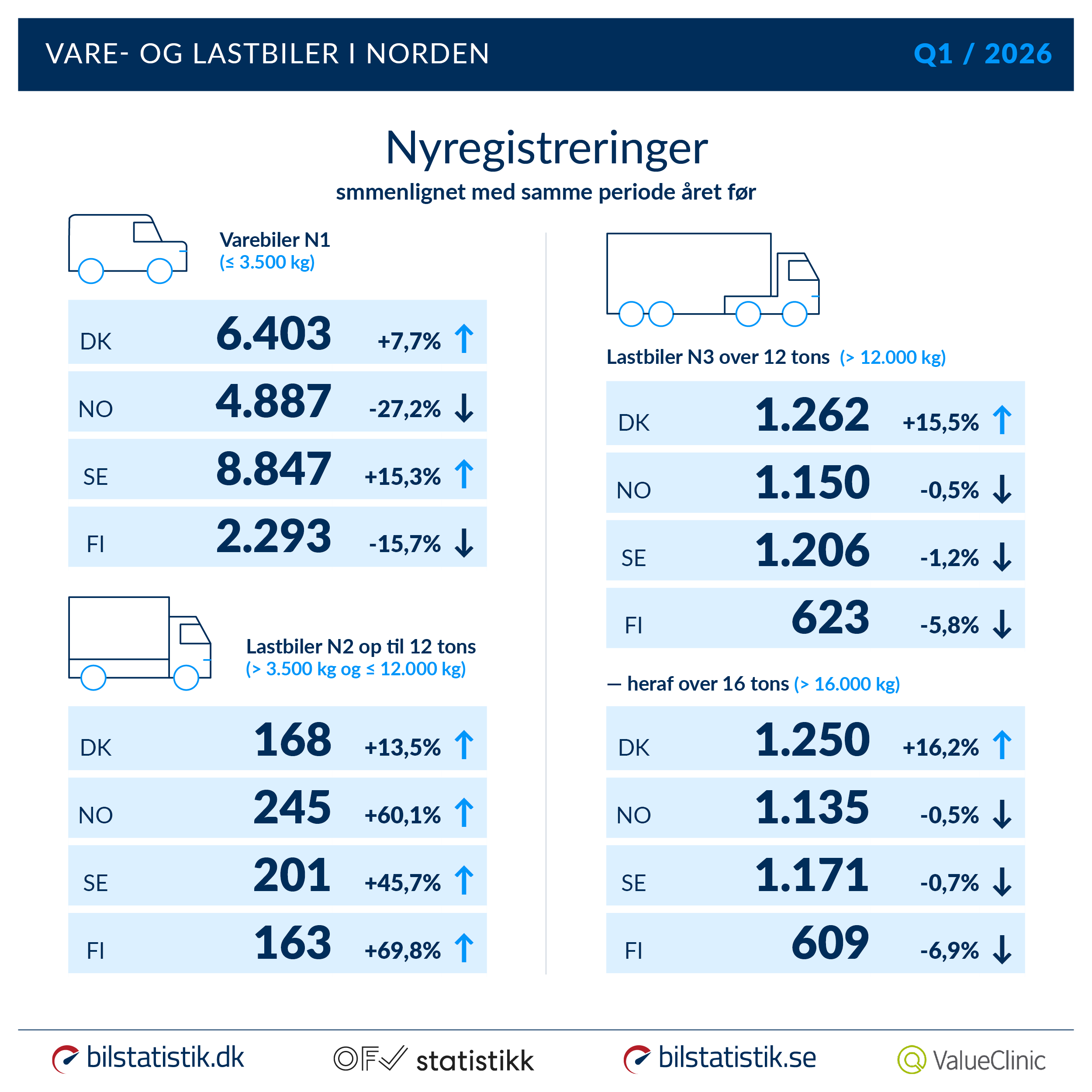
Sweden and Denmark recorded the strongest growth in van registrations in Q1. Sweden registered 8,847 vans, up 15.3%, while Denmark registered 6,403, up 7.7%. Finland recorded 2,293 new vans, down 15.7%, and Norway registered 4,887, down 27.2%.
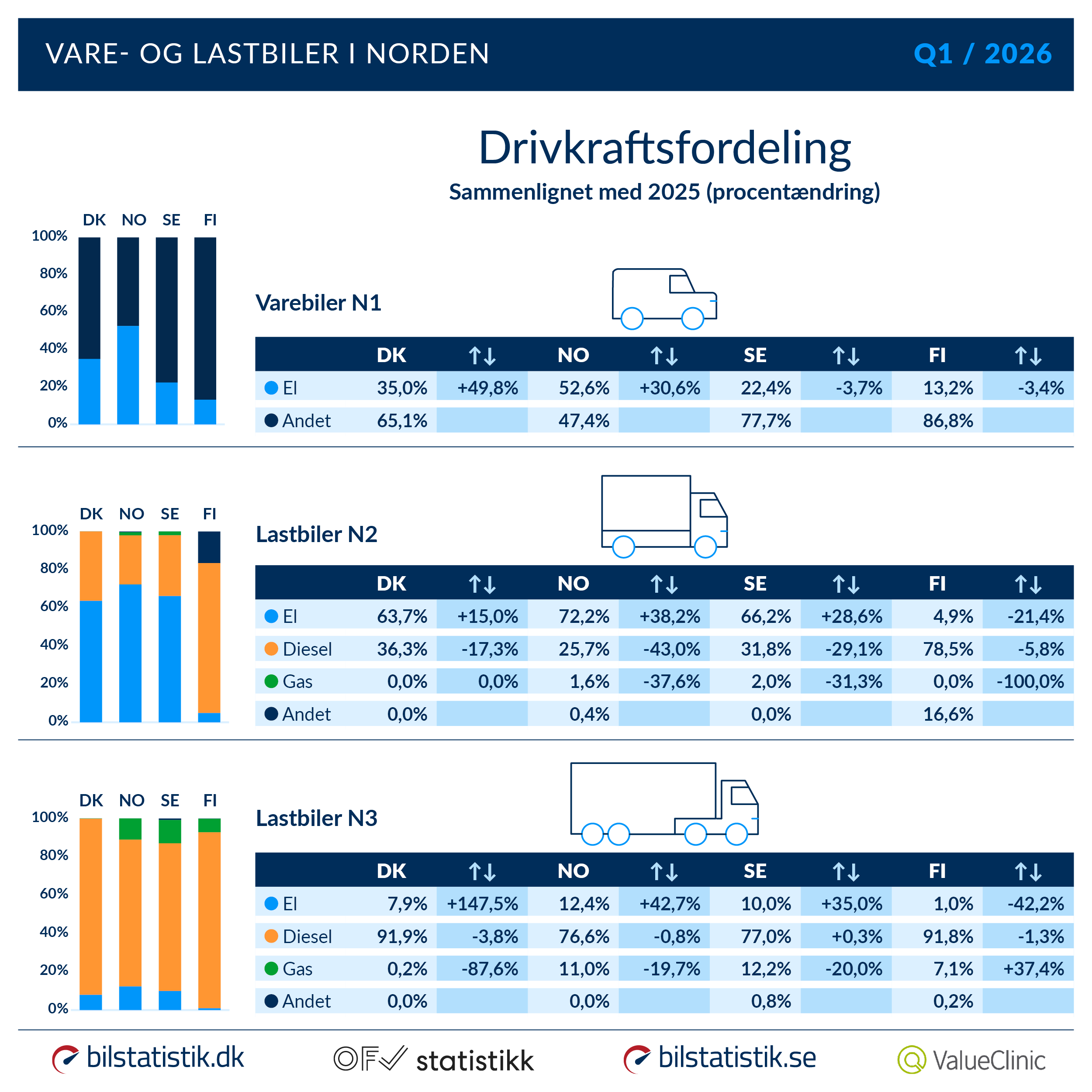
The van powertrain mix resembles the pattern seen in passenger cars. Electric shares are growing in Denmark and Norway and remain considerably higher than in Sweden and Finland.
As with passenger cars, Norway leads on the electric share of vans. It reached almost 53% in Q1, up 30.6% compared with Q1 2025. Denmark followed at 35%, up 49.8%. Sweden and Finland did not show the same clear growth: Sweden’s electric share was 22.4% and Finland’s 13.2%, down 3.7% and 3.4% respectively compared with Q1 2025.
“The first-quarter figures show that developments largely follow the policy frameworks in each country. If more vans and trucks are to become electric, policymakers must support the transition with stable and predictable conditions that make choosing electric vehicles realistic and attractive,” says Jonathan Schacht Halling Nielsen, Deputy Director of Mobility Denmark.
Growth across all N2 markets
All four markets recorded growth in the N2 segment, covering trucks between 3.5 and 12 tonnes. Percentage changes are sensitive to the segment’s relatively small size, but increases ranging from 13.5% to 69.8% are positive nonetheless.
For heavier N3 trucks, Denmark finished the quarter up 15.5%, while the other three markets ended slightly below last year: Norway by 0.5%, Sweden by 1.2% and Finland by 5.8%.
Given vehicle delivery times, it is still difficult to judge how much geopolitical unrest has affected the market. According to Teemu Rennola, CEO of Finland’s Value Clinic, the situation matters both now and for future developments:
“The first-quarter figures suggest that the market is in a transitional, wait-and-see phase. Customer decisions are currently slowed by general economic uncertainty, energy prices resulting from the situation in the Middle East, and discussions about possible tariffs. Despite this, investment in transport fleets has clear momentum, especially in the light-truck segment, reflecting long-term needs in logistics and distribution. Overall, the market is looking for direction, and restoring confidence will be crucial to developments over the rest of the year.”
Notable brands in the top 10 lists
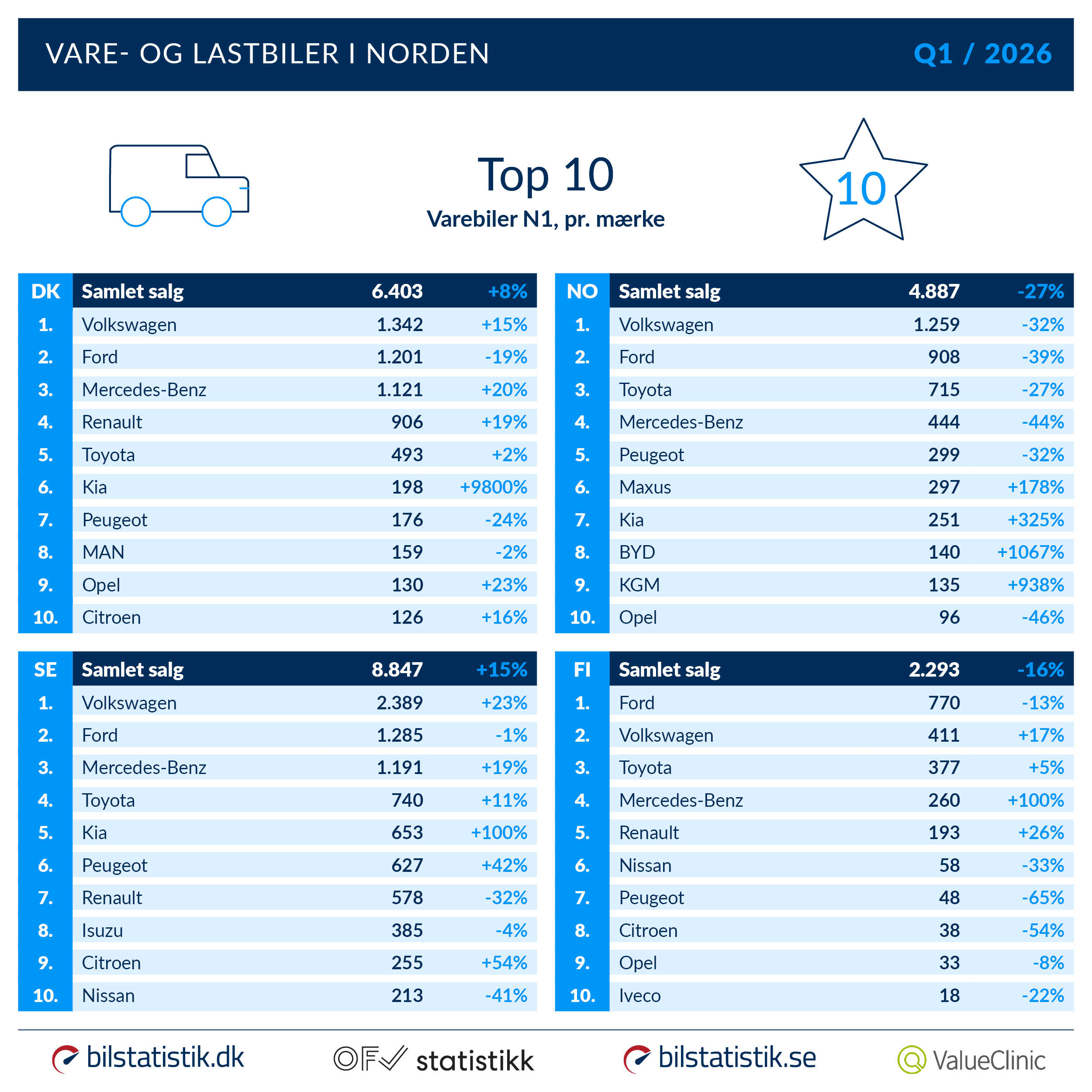
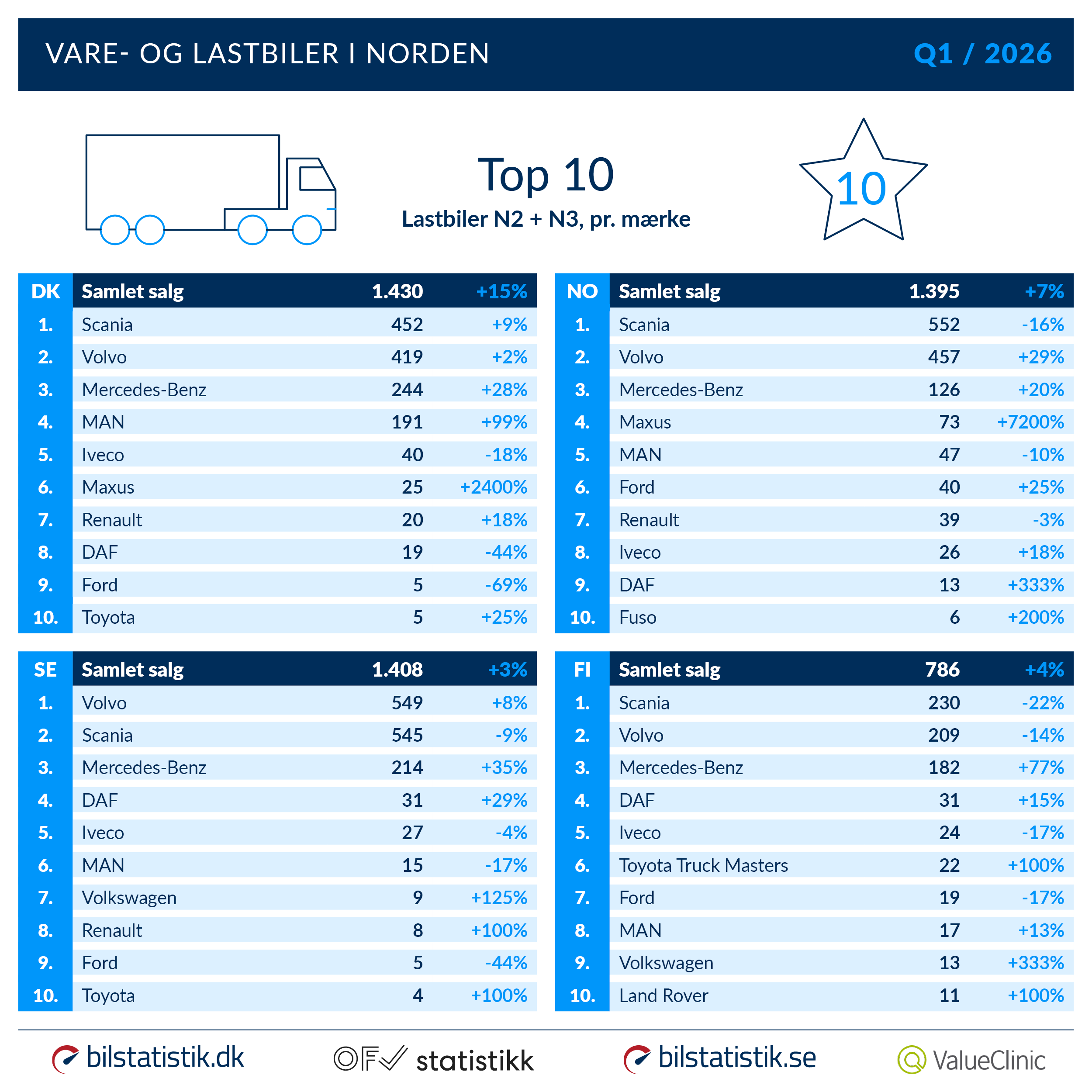
The most popular makes differ little across the four markets. Unsurprisingly, Scania, Volvo and Mercedes-Benz dominate the truck market throughout the Nordics. Volkswagen and Ford lead the van rankings, while differences between countries become more apparent further down the lists. In Norway, for example, Maxus, BYD and KGM all appear.
Attentive readers may notice a curious detail in Finland’s N2+N3 top 10: Land Rover and Toyota Truck Masters appear with 22 and 11 vehicles respectively. Some companies specialise in converting vehicles that would originally be classified as vans or passenger cars. The conversions and more robust specifications qualify them for N2 classification for tax purposes, which is why they appear in these figures.
Sharing data
Figures and data from this article may only be shared with the following source references:
Danish data: Bilstatistik.dk
Swedish data: Bilstatistik.se
Norwegian data: Norwegian Road Traffic Information Council (OFV)
Finnish data: Value Clinic (Finnish Transport and Communications Agency Traficom, Transport Register)